Experience expert orthopedic care in Nashik. Our dedicated team offers personalized treatments for all orthopedic conditions, ensuring your well-being and restoring mobility with precision and care.
Shop No. 325, 3rd Floor, Roonga Supreme, Chandak Cir, Mumbai Naka, Matoshree Nagar, Nashik, Maharashtra 422003
The shoulder joint is one of the most flexible and complex joints in the human body, allowing a wide range of motion for daily activities such as lifting, reaching, and rotating the arm. However, because of its mobility, the shoulder is also prone to injuries, wear and tear, arthritis, and degenerative conditions. Modern orthopedic care offers two highly effective solutions for severe shoulder problems: Shoulder Arthroscopy (minimally invasive repair) and Shoulder Replacement Surgery (arthroplasty).
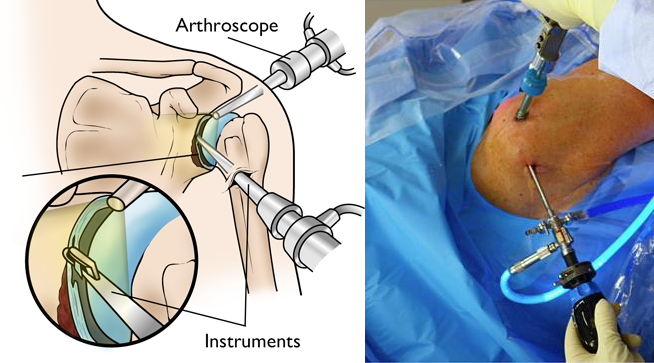
Shoulder arthroscopy is a minimally invasive procedure in which a tiny camera (arthroscope) and specialized instruments are inserted through small incisions to diagnose and treat shoulder conditions. This technique provides direct visualization of the joint and allows precise treatment without the need for large cuts.
Conditions Treated with Shoulder Arthroscopy:
Rotator cuff tears
Shoulder impingement syndrome
Labral tears and shoulder instability
Frozen shoulder (adhesive capsulitis)
Cartilage damage and arthritis in early stages
Removal of bone spurs or loose fragments
Benefits of Arthroscopy:
Smaller incisions, less scarring
Reduced pain and quicker recovery
Minimal hospital stay
Faster return to daily activities and sports
When severe arthritis, fractures, or joint damage cannot be managed with arthroscopy or conservative treatments, Shoulder Replacement Surgery becomes the best option. In this procedure, the damaged parts of the shoulder joint are replaced with artificial implants that replicate the natural ball-and-socket mechanism of the joint.
Types of Shoulder Replacement Surgeries:
Total Shoulder Replacement (Anatomic Arthroplasty):
Both the ball (humeral head) and socket (glenoid) are replaced with prosthetic components.
Partial Shoulder Replacement (Hemiarthroplasty):
Only the ball of the joint is replaced, usually in cases of severe fractures.
Reverse Shoulder Replacement:
Recommended for patients with large rotator cuff tears or complex arthritis. In this technique, the positions of the ball and socket are reversed to improve stability and function.
Revision Shoulder Replacement:
A repeat surgery performed when a previous shoulder implant fails or wears out.
Benefits of Shoulder Replacement:
Long-lasting relief from pain caused by arthritis or injury
Improved range of motion and stability
Ability to perform daily activities with greater comfort
Restoration of strength and shoulder function
Enhanced quality of life and independence
Both arthroscopy and replacement are followed by structured physiotherapy and rehabilitation programs. These programs help strengthen shoulder muscles, restore flexibility, and ensure long-term success of the surgery. Most patients begin gentle movements within days, and complete recovery usually occurs within a few weeks for arthroscopy, and a few months for replacement.
Patients with persistent shoulder pain unresponsive to medications or injections
Individuals with rotator cuff injuries or labral tears
Patients with severe shoulder arthritis or fractures
Older adults with degenerative conditions limiting daily activities
Athletes or active individuals with recurring shoulder instability
WhatsApp us