Experience expert orthopedic care in Nashik. Our dedicated team offers personalized treatments for all orthopedic conditions, ensuring your well-being and restoring mobility with precision and care.
Shop No. 325, 3rd Floor, Roonga Supreme, Chandak Cir, Mumbai Naka, Matoshree Nagar, Nashik, Maharashtra 422003
Hip Arthroplasty, commonly known as Hip Replacement Surgery, is a highly effective orthopedic procedure that replaces a damaged or diseased hip joint with an artificial implant (prosthesis). It is one of the most successful surgeries in modern medicine, offering long-term pain relief, improved mobility, and a better quality of life for patients suffering from chronic hip problems.
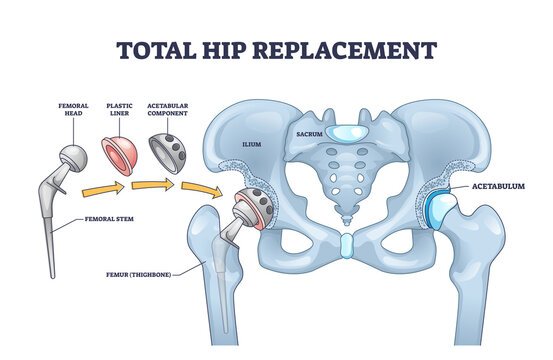
The hip is a ball-and-socket joint where the head of the thighbone (femur) fits into the socket of the pelvis (acetabulum). Conditions such as osteoarthritis, rheumatoid arthritis, avascular necrosis, hip fractures, and congenital deformities can damage this joint, causing severe pain, stiffness, and difficulty in walking or performing daily activities.
During hip arthroplasty, the damaged bone and cartilage of the hip are carefully removed and replaced with artificial components. These implants are usually made of metal alloys, high-quality ceramics, or durable medical-grade plastics that replicate the natural function of the hip joint. The new prosthesis allows smooth, pain-free movement and restores stability.
Doctors may recommend hip replacement if:
Persistent hip pain limits walking, climbing stairs, or even resting.
Medications, physiotherapy, and lifestyle changes no longer provide relief.
Severe joint damage is visible on X-rays or MRI scans.
Hip stiffness and deformity interfere with daily activities.
Frequent hip fractures or degeneration affect independence.
Total Hip Replacement (THR):
Both the ball (femoral head) and socket (acetabulum) are replaced with artificial implants.
Partial Hip Replacement (Hemiarthroplasty):
Only the damaged femoral head is replaced, often used in fracture cases.
Hip Resurfacing:
The femoral head is reshaped and covered with a metal cap instead of being removed, usually for younger, active patients.
Revision Hip Replacement:
A repeat surgery performed when a previous hip implant wears out, loosens, or causes complications.
Long-lasting pain relief from arthritis or injury.
Improved walking ability, flexibility, and stability.
Correction of hip deformities and leg length differences.
Enhanced ability to perform daily and recreational activities.
Significant improvement in overall quality of life and independence.
Thanks to technological progress, today’s hip replacements are safer, more precise, and longer-lasting:
Minimally Invasive Surgery: Smaller incisions, faster healing, and less scarring.
Robotic & Computer-Assisted Surgery: Provides accuracy in implant positioning for better outcomes.
High-Performance Implants: Designed to last 20 years or more, even in active patients.
Enhanced Recovery Protocols: Many patients start walking within 24–48 hours after surgery.
Recovery involves a structured rehabilitation program including physiotherapy, walking exercises, and muscle strengthening. With proper care:
Most patients regain the ability to walk without support within weeks.
Daily activities like climbing stairs, sitting cross-legged, or driving become comfortable again.
Many return to light sports and recreational activities after full recovery.
Hip arthroplasty is ideal for:
Patients with advanced arthritis of the hip joint.
Individuals with hip fractures that cannot be repaired by other methods.
Patients with avascular necrosis (loss of blood supply to hip bone).
Those experiencing chronic pain and disability despite non-surgical treatments.
WhatsApp us